

When discussing affordable air travel in India, one name towers above all—Captain Guru Ramaswamy Iyengar Gopinath, famously known as G. R. Gopinath. This retired Indian Army officer turned visionary entrepreneur didn’t just build an airline; he revolutionized how millions of Indians travel. By founding Air Deccan, India’s first low-cost airline, Gopinath transformed aviation from an elite privilege into a common man’s reality.
In 2025, his story transcends business success—it embodies resilience, calculated risk-taking, and entrepreneurial courage. His current net worth reflects not only financial achievements but also the profound impact he’s made on India’s economic and social landscape.
G. R. Gopinath Net Worth in Rupees 2025
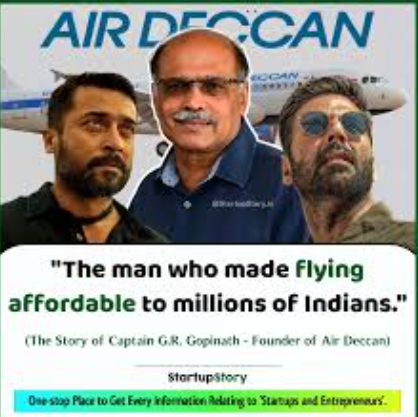
As of 2025, G. R. Gopinath’s net worth is estimated at approximately ₹1,000 crore to ₹1,200 crore, though various sources report different figures. His wealth stems from diverse income streams including entrepreneurial ventures, real estate holdings, book royalties, public speaking engagements, and advisory roles with startups.
While Air Deccan’s journey included both triumphs and challenges—culminating in its merger with Kingfisher Airlines—Gopinath has maintained financial stability through strategic investments and continued involvement in India’s business ecosystem.
G. R. Gopinath Net Worth Breakdown by Income Source
| Income Source | Estimated Annual Contribution | Details |
|---|---|---|
| Aviation Ventures | ₹50-75 crore | Earnings from past ventures including Deccan Aviation and Air Deccan sale proceeds |
| Real Estate Holdings | ₹200-300 crore | Prime properties in Bangalore and agricultural land in Karnataka |
| Book Royalties | ₹5-10 crore | Ongoing sales of “Simply Fly: A Deccan Odyssey” and other writings |
| Public Speaking | ₹15-25 crore | Global conferences, business forums, and educational institutions |
| Advisory Roles | ₹20-30 crore | Startup mentorship and strategic consulting |
| Other Investments | ₹100-150 crore | Diversified portfolio including stocks and business ventures |
Early Life and Education: From Village Roots to Military Training
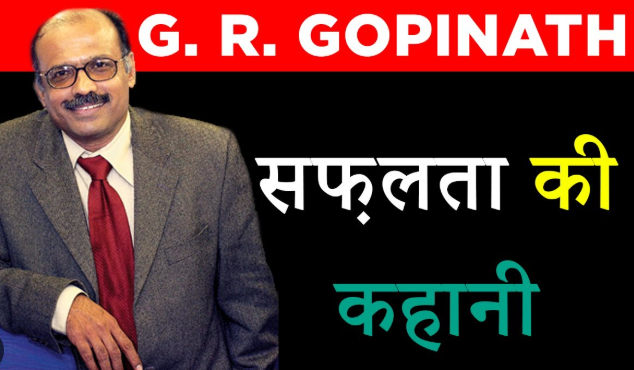
Gopinath was born on November 13, 1951, in Gorur, a small village in Karnataka’s Hassan district. Growing up in rural India, he witnessed firsthand the challenges faced by ordinary citizens—experiences that would later fuel his mission to democratize air travel.
His father, Gorur Ramaswamy Iyengar, was a school teacher who initially believed in homeschooling. Despite starting formal education late and joining directly in Standard V, young Gopinath’s determination was evident. His limited English proficiency initially prevented him from clearing the military school entrance exam, but after petitioning the Ministry of Defense, he was allowed to write the exam in Kannada and cleared the entrance on his second attempt.
In 1962, after clearing the admission test, he joined Sainik School, Bijapur, where he received rigorous training. He subsequently attended the National Defence Academy (NDA) in Khadakwasla and graduated from the Indian Military Academy in Dehradun, preparing him for a distinguished military career.
Military Career: Serving the Nation with Distinction
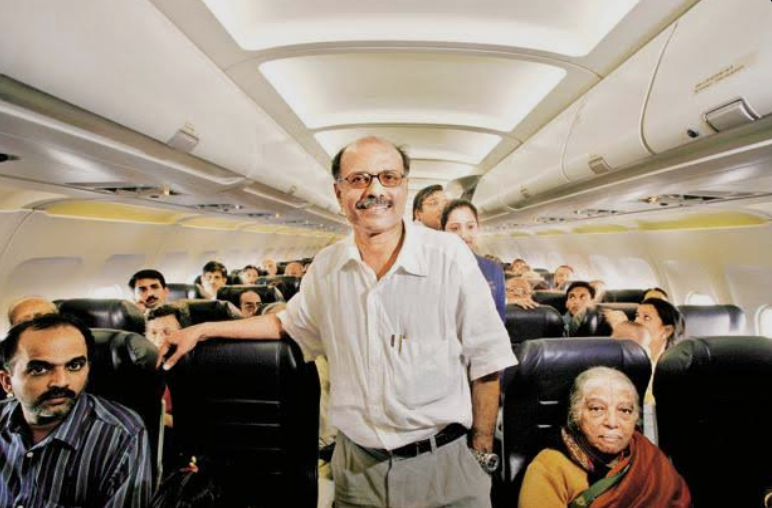
After graduating from the Indian Military Academy, Gopinath earned a commission in the Indian Army. When he was graduating in 1971, his training was cut short when the 1971 Bangladesh Liberation War broke out. At just 20 years old, he was posted to Sikkim and later participated in the Indo-Pak war.
During his eight-year military service, he rose to the rank of Captain, serving as a helicopter pilot. The army instilled in him invaluable qualities—discipline, strategic thinking, leadership, and decisiveness—that would prove essential in his later entrepreneurial ventures.
However, frustrated with the slow pace of promotion in the army, he took early retirement at the age of 28, marking the beginning of his extraordinary entrepreneurial journey.
Early Ventures: From Farming to Entrepreneurship
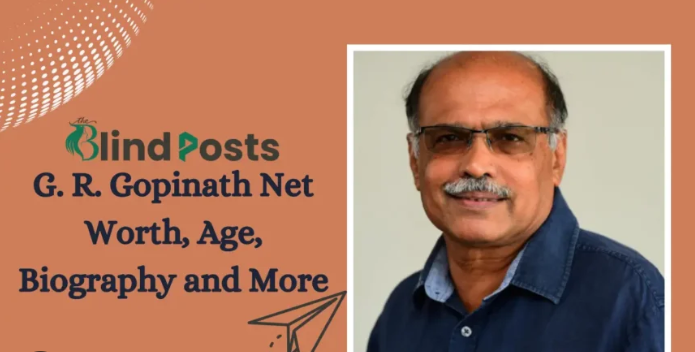
Upon leaving the military, Gopinath didn’t immediately enter aviation. Instead, he explored various business opportunities:
Sericulture Farming: Upon retirement from the armed forces, he established an ecologically sustainable sericulture farm; his innovative methods earned him the Rolex Laureate Award in 1996. This prestigious recognition validated his approach to sustainable agriculture and entrepreneurship.
Deccan Aviation (1997): In 1997 he co-founded Deccan Aviation, a charter helicopter service with his two friends, who were also in air force. The company provided helicopter services to politicians, corporate clients, and participated in rescue missions across South Asia. Deccan Aviation grew to become one of India’s largest private air charter companies, giving Gopinath crucial insights into the aviation industry.
These early ventures, though modest in scale, provided invaluable lessons in business management, risk assessment, and handling failures—preparing him for his most ambitious project yet.
The Birth of Air Deccan: Revolutionizing Indian Aviation
In 2003, inspired by the success of Southwest Airlines in the United States and Ryanair in Europe, Gopinath launched Air Deccan—India’s first low-cost carrier. His vision was elegantly simple yet revolutionary: “Every Indian should be able to fly.”
Air Deccan launched operations on August 25, 2003, with a flight from Bengaluru to Hubbali. Before Air Deccan, flying in India was largely reserved for the wealthy and business class. Gopinath’s airline changed everything.
Revolutionary Business Model
Air Deccan’s success was built on several innovative strategies:
- Unprecedented Low Fares: Sometimes as low as ₹1, making headlines nationwide and attracting first-time flyers
- Point-to-Point Network: Operating from seven base airports with efficient turnaround times
- Technology Integration: For reservations, the airline utilized multiple channels connected to a fully web-enabled reservation system, making Air Deccan the first in India to use such a system
- Cost Optimization: Outsourced work to local airport employees at smaller airports
- Paperless Operations: Air Deccan avoided the cost of printing tickets; passengers or travel agents were required to do so off the Internet
- Advertising Revenue: Allowed advertisements both inside and outside aircraft
Within just a few years, Air Deccan expanded rapidly, garnering more than 20 percent market share and connecting 69 cities across India—including many tier-2 and tier-3 cities that had never seen regular commercial flights.
The Highs and Lows of Air Deccan: From Success to Strategic Merger
Air Deccan’s initial success was phenomenal, but the airline soon faced significant challenges:
- Intense Competition: Established full-service carriers and emerging budget airlines
- Rising Fuel Prices: Dramatically increased operational costs
- Infrastructure Bottlenecks: India’s aviation infrastructure struggled to keep pace
- Financial Losses: Air Deccan had lost ₹213 crore during the quarter ending March 31, 2007
The Kingfisher Airlines Merger (2007)
In early May 2007, rumors began to circulate that Vijay Mallya, founder of Kingfisher Airlines, was interested in buying Air Deccan. Initially, Gopinath dismissed these rumors, famously stating they were “from different planets.”
However, negotiations progressed quickly. On May 31, 2007, after a week of intense negotiations, the board of Deccan Aviation Ltd approved the acquisition of 26% of its equity by United Breweries Holdings Ltd at a price representing approximately a 10% premium to the prevailing market price.
Vijay Mallya paid Rs 550 crore to acquire 26% equity in Deccan. Subsequently, he paid an additional Rs 418 crore for a further 20% stake through an open offer, giving UB Group controlling interest.
Air Deccan was rebranded Simplifly Deccan in October 2007 and adopted Kingfisher’s livery and flight attendant uniform. In December 2007, the airlines announced that they would merge into a single corporate entity while maintaining separate brands.
By August 2008, the Air Deccan brand was completely absorbed into Kingfisher Red, and Gopinath sold most of his stake in the company in 2009.
While the merger marked the end of Air Deccan as an independent entity, it secured Gopinath’s financial standing through the substantial sale proceeds.
Post-Air Deccan Ventures: Continued Innovation
After exiting Air Deccan, Gopinath remained entrepreneurially active:
Deccan 360 (2009-2013): Gopinath used the money from the UB Group deal to start Deccan 360, a cargo airline, in May 2009. But that enterprise too was squeezed by a severe cash crunch and shut shop in 2011. In July 2013, Deccan 360 was ordered to wind up by the Karnataka High Court order based on petitions filed by creditors seeking recovery of amounts due to them.
Literary Contributions: Gopinath authored his autobiography “Simply Fly: A Deccan Odyssey,” which became essential reading for entrepreneurs and business students across India. The book provides candid insights into his entrepreneurial journey, failures, and successes.
Advisory Roles: He actively mentors startups and serves as a thought leader in India’s aviation and entrepreneurial ecosystem, sharing his expertise with the next generation of innovators.
Political Endeavors: In 2009, Gopinath contested as an independent candidate in Bangalore South constituency at the Lok Sabha elections but was defeated. While his political career was brief, it demonstrated his commitment to public service.
Continued Advocacy: As recently as November 2024, Gopinath spoke at public forums about Karnataka’s development, emphasizing the need for multiple airports and decentralized growth, showing his ongoing engagement with aviation policy and regional development.
Sources of Income in 2025
G. R. Gopinath’s wealth in 2025 derives from multiple revenue streams:
- Aviation Ventures: Proceeds from the Air Deccan sale and past aviation businesses
- Real Estate Investments: Premium properties in Bangalore and agricultural land in Karnataka that have appreciated significantly
- Book Royalties: Ongoing income from “Simply Fly: A Deccan Odyssey” and other publications
- Public Speaking: High-profile invitations to global business forums, conferences, and educational institutions
- Advisory and Mentorship: Consulting for startups and established businesses
- Investments: Diversified portfolio across sectors
Properties and Lifestyle: Wealth with Humility
Despite his substantial wealth, Gopinath is known for maintaining a modest lifestyle:
Real Estate Holdings:
- Premium residential property in Bangalore valued at several crores
- Agricultural farmland in Karnataka, reflecting his continued interest in sustainable farming
- Strategic real estate investments that have appreciated over time
Lifestyle Philosophy: Known for his humility and simplicity, Gopinath emphasizes discipline over extravagance. This approach reflects his military background and his genuine connection to his rural roots.
Net Worth Growth Over the Years: A Financial Journey
G. R. Gopinath Net Worth Timeline (2000-2025)
| Year | Estimated Net Worth | Key Milestones |
|---|---|---|
| 2000 | ₹50 Crore | Early success with Deccan Aviation |
| 2003 | ₹100 Crore | Air Deccan launch |
| 2005 | ₹250 Crore | Rapid Air Deccan expansion, IPO |
| 2007 | ₹500 Crore | Kingfisher merger deal |
| 2010 | ₹600 Crore | Post-merger wealth consolidation |
| 2015 | ₹800 Crore | Real estate appreciation, advisory roles |
| 2020 | ₹950 Crore | Diversified investments |
| 2025 | ₹1,000-1,200 Crore | Multiple income streams, continued influence |
This growth trajectory demonstrates Gopinath’s resilience and ability to maintain wealth despite the challenges faced by Air Deccan.
Awards and Recognition: Celebrating a Pioneer
Gopinath’s contributions have earned him numerous prestigious awards:
- Rolex Laureate Award (1996): For innovative sustainable agriculture
- Chevalier de la Légion d’honneur (2006): In May 2006, he was knighted with “Chevalier de la Legion d’Honneur” the civilian award conferred by the French Government
- Rajyotsava Award: From the Karnataka government in 2005
- Personality of the Decade Award: From the K.G. Foundation
- Sir M. Visvesvaraya Memorial Award: From the Federation of Karnataka Chambers of Commerce and Industry
- Forbes India Recognition: Featured multiple times for his contribution to Indian aviation
- Business School Case Studies: His journey is taught in business schools worldwide as a case study in entrepreneurship
Public Image and Influence: A Legacy Beyond Wealth
Gopinath is admired not merely for business success but for his vision, courage, and commitment to social impact:
Inspirational Figure: His story of transforming from a small-village boy to an aviation revolutionary inspires countless entrepreneurs. Movies like the Tamil film “Soorarai Pottru” and its Bollywood remake “Sarfira” (starring Akshay Kumar) have brought his story to millions of viewers.
Educational Impact: Business schools across India use his journey as a case study in innovation, risk-taking, and perseverance.
Thought Leadership: He continues to speak at forums about entrepreneurship, sustainable development, and aviation policy, maintaining his influence in shaping India’s business discourse.
Social Legacy: Beyond wealth creation, Gopinath’s true achievement lies in enabling millions of middle-class Indians to experience air travel for the first time, fundamentally changing their lives and opportunities.
Future Outlook: What Lies Ahead
By 2025, Gopinath remains influential in India’s entrepreneurial circles:
Growing Relevance: With the rise of new low-cost airlines like IndiGo and SpiceJet, and the expanding middle-class demand for travel, his vision has become more relevant than ever. The low-cost aviation model he pioneered now dominates Indian skies.
Continued Advisory Role: He actively mentors startups and provides strategic guidance to businesses, particularly in aviation and logistics sectors.
Real Estate Appreciation: His property holdings in Bangalore and Karnataka continue to appreciate, potentially driving his net worth higher.
Financial Projections: Looking forward, analysts estimate his net worth could potentially cross ₹1,500 crore by 2030, especially through real estate appreciation and continued advisory income.
Policy Advocacy: Gopinath continues to advocate for aviation infrastructure development in Karnataka, calling for multiple airports and improved training facilities, demonstrating his ongoing commitment to the industry he transformed.
Conclusion: More Than Money—A Legacy of Opportunity
In 2025, G. R. Gopinath’s net worth stands at an estimated ₹1,000-1,200 crore, but these numbers tell only part of his remarkable story. From a small village in Karnataka to revolutionizing Indian aviation, his journey exemplifies how vision combined with determination can transform entire industries.
While Air Deccan no longer operates as an independent airline, its impact remains eternal and profound. Gopinath didn’t just build a business—he created a movement that democratized Indian skies. He proved that affordable air travel wasn’t just a dream but an achievable reality, inspiring a generation of entrepreneurs to challenge conventional wisdom and serve the underserved.
His wealth is impressive, certainly, but his true legacy transcends financial metrics. It lives in the opportunities he created for millions of ordinary Indians who could suddenly afford to fly, in the entrepreneurs he continues to mentor, and in the aviation industry he fundamentally transformed.
Captain G. R. Gopinath stands today as a pioneer, a mentor, and an enduring symbol of entrepreneurial courage—proof that one person’s vision can indeed change a nation.
Frequently Asked Questions
What is G. R. Gopinath’s net worth in 2025?
His net worth in 2025 is estimated at ₹1,000–1,200 crore.
It comes from aviation ventures, real estate, books, and advisory roles.
How much did G. R. Gopinath earn from Air Deccan?
He earned major wealth after selling Air Deccan stakes to Kingfisher.
The deal significantly boosted his overall net worth.
What are the income sources of G. R. Gopinath?
His income comes from aviation, book royalties, investments, and speaking events.
He also earns through advisory roles for startups.
Did G. R. Gopinath become a billionaire?
Yes, his net worth crossed ₹1,000 crore, placing him among Indian multimillionaires.
He built wealth through strategic business ventures.
How did G. R. Gopinath build his wealth?
He built wealth through Air Deccan, Deccan Aviation, and real estate.
His books and public speaking add additional income.
What is G. R. Gopinath’s income per year?
His annual income varies based on investments and advisory work.
He earns crores yearly from multiple income streams.
How much property does G. R. Gopinath own?
He owns prime properties in Bangalore and farmland in Karnataka.
His real estate assets are valued at several crores.
Is G. R. Gopinath still earning after selling Air Deccan?
Yes, he continues earning through investments and mentorship roles.
He remains active in business and public life.
What is the financial status of Air Deccan founder in 2025?
He is financially strong with a net worth above ₹1,000 crore.
His diversified portfolio ensures steady income.
Will G. R. Gopinath’s net worth increase in the future?
Yes, experts predict his wealth could reach ₹1,500 crore by 2030.
Real estate and advisory income will drive the growth.